Tuesday, May 24, 2011

9 Soups That Make You Fat


#1: WORST “HEALTHY” SOUP
Cosi’s Tomato & Basil Aurora Soup (Large)
597 calories
54 g fat (33 g saturated)
1,701 mg sodium 
In terms of saturated fat, this bowl trounces every other soup on this page. That's nothing to be proud of. What's most frightening here is that one would expect a tomato-based soup to be relatively safe. Guess it's true what they say: You can't judge a soup by its vegetables. (They do say that, right?) Switch to the Chicken Queso Tortilla Soup for a low-calorie, high protein alternative.
Eat This Instead!Cosi’s Chicken Queso Tortilla Soup (Large)
300 calories
13 g fat (7 g saturated)
1,200 mg sodium

#2: WORST CHILI
Panera’s All-Natural Steak Chili with Cornbread (Large)
580 calories
26 g fat (8 g saturated)
1,330 mg sodium 
Chili has a lot going for it: protein from the meat, fiber from the beans, and plenty of phytonutrients from the tomato base. This bowl might actually pass muster if it weren't for the 200-calorie hunk of cornbread that comes with it. If you must order the chili, opt out of the cornbread. Otherwise, you're better off with the soup-and-salad combo below.
Eat This Instead!Panera’s Low-Fat Garden Vegetable Soup with Pesto and Classic Café Salad with Balsamic Vinaigrette (You Pick Two combo)
190 calories
8 g fat (1 g saturated)
960 mg sodium

#3: WORST BISQUE
Au Bon Pain’s Lobster Bisque (Large)
540 calories
39 g fat (24 g saturated, 1.5 g trans)
1,830 mg sodium
Lobster on its own has a number of merits: it’s tasty, low-fat, and loaded with protein. Too bad those merits don't hold up when it's drowning in a viscous puddle of fat. This bowl comes with the usightly blemish of trans fat plus 20 percent more saturated fat than you should consume in an entire day.  And in terms of overall energy, you would have to run five miles to undo the damage. Better choice: Switch to the Tomato Rice soup. It keeps the calories commendably low and carries one of the lowest sodium counts you're likely to ever encounter in a commercially prepared soup.
Eat This Instead!Au Bon Pain’s Tomato Rice Soup (Large)
170 calories
2 g fat (0 g saturated)
390 mg sodium

#4: WORST CHOWDER
Red Lobster’s New England Clam Chowder (Bowl)
480 calories
34 g fat (20 g saturated)
1,390 mg sodium

Notice something here? This is the second clam chowder on this list. That's because the New England version of the soup is made with a thick and fatty base of oil and cream. But don't worry; you don't have to give up chowder entirely. Just swtich to Manhattan style. It swaps out the cream for tomato, eliminating virtually all the dangerous fats. If you make this switch just three times a week, you'll drop 9 pounds over the course of a year. The sodium's still culpable though, so make an effort to go low-sodium for the rest of the day.
Eat This Instead!Red Lobster’s Manhattan Clam Chowder (Bowl)
160 calories
2 g fat (1 g saturated)
1,420 mg sodium

#5: WORST VEGETABLE SOUP
Einstein Bros. Broccoli Cheese Soup (Bowl)
470 calories
33 g fat (19 g saturated, 1 g trans)
1,910 mg sodium

Most iterations of broccoli cheese soup are made up of very little broccoli and a whole lot of cheese, and no bowl exemplifies that problem better than this one from Einstein Bros. These florets amount to little more than flotsam in a sea of highly saturated dairy fat. Opt for the Chicken Noodle instead and you'll win every nutritional matchup as well as earn 80 percent of your vitamin A for the day.

Eat This Instead!
Einstein Bros. Chicken Noodle Soup (Bowl)
180 calories
6 g fat (1.5 g saturated)
1,210 mg sodium
#6: WORST SOUTHWESTERN SOUP
Chili’s Sweet Corn Soup (Bowl)
450 calories
36 g fat (20 g saturated)
960 mg sodium
Unprocessed corn is a great source of fiber, folate, phosphorus, and manganese. But this bowl? It's just a great source of saturated fat. In fact, one serving contains 20 grams, which is your entired day's allotment. Instead, opt for the Chicken and Green Chile soup. It’s garnished with heart-healthy avocado, and the heat from the peppers will jumpstart your metabolism. The sodium is a little higher, but in this case it's worth it—you shed 250 calories and cut the saturated fat by 85 percent.

Eat This Instead!Chili’s Chicken and Green Chile Soup (Bowl)
200 calories
7 g fat (3 g saturated)
1,240 mg sodium

#7: WORST POTATO SOUP
Applebee’s Baked Potato Soup (Bowl)
440 calories
31 g fat (14 g saturated)
1,270 mg sodium
Starting your meal with this bowl of soup is like swinging through the McDonald's drive-thru for a Double Cheeseburger on the way to dinner. Of course, the cheeseburger is healthier—it won't saddle you with as much sodium or saturated fat. If you're looking for a starter soup, think broth. It whets your appetite without pumping you full of cream or butter.
Eat This Instead!Applebee’s Chicken Noodle Soup (Bowl)
160 calories
4 g fat (1 g saturated)
1,120 mg sodium

#8: WORST ASIAN SOUP
P.F. Chang’s Hot and Sour Soup (Bowl)
400 calories
15 g fat (5 g saturated)
5,000 mg sodium
Soup is notorious for being loaded with sodium, but no other bowl on this page comes anywhere close to the 5,000 milligrams in Chang's Hot and Sour. Sure the mineral is necessary for normal bodily functioning, but no person should take in more than 2,300 milligrams per day. Most people would be better maxing out at about 1,500 milligrams. At current rates, Americans consume roughly double their recommended daily intake, which is perhaps why one in three—that's more than 100 million Americans—lives with high blood pressure. Unfortunately there's not a safe bowl on Chang's menu, so if you want soup, you'll have to downgrade to the starter size. Egg Drop is the best choice, but if you slip up and order a full bowl, expect the sodium to skyrocket to 2,410 milligrams.
Eat This Instead!PF Chang’s Egg Drop Soup (Cup)
60 calories
3 g fat
640 mg sodium

#9: WORST SUPERMARKET SOUP
Campbell's Chunky New England Clam Chowder (1 cup)
230 calories
13 g fat (2 g saturated)
890 mg sodium
Each can contains two servings, so the net damage of a full bowl is 460 calories and 1,780 milligrams of sodium. Eat that alongside a sandwich—even a simple ham and cheese—and you're facing an energy tariff of nearly 1,000 calories. The good news? Campbell’s offers a Healthy Request collection of highly improved, updated versions of classic favorites. Make the swap here and you cut an effortless 200 calories from this can and slash the sodium by more than 50 percent.
Eat This Instead!Campbell’s Healthy Request New England Clam Chowder (1 cup)
130 calories
3 g fat (1 g saturated)
410 mg sodium

Monday, May 23, 2011

7 Worst Supermarket Breakfasts


#1: WORST BREAKFAST BOWL
Jimmy Dean Breakfast Bowls: Pancakes and Syrup and Sausage Links (1 bowl)
710 calories
34 g fat (12 g saturated)
35 g sugar
1,000 mg sodium
It should come as no surprise that the top two breakfast offenders come from the king of sausage. This bowl surpasses the other items on this list in every category: calories, fat, saturated fat, sugar, and sodium. You would have to bike roughly 17 miles to burn off just one of these breakfasts. Most of Jimmy Dean's breakfast can at least back their calories with a substantial amount of protein, but this bowl has a paltry 12 grams. The Smart Ones breakfast below manages to squeeze in 15 grams, and it does it with 500 fewer calories!
Eat This Instead!Smart Ones Morning Express Cheesy Scramble with Hashbrowns (1 package)
210 calories
9 g fat (4 g saturated)
1 g sugar
510 mg sodium


#2: WORST BREAKFAST SANDWICH
Jimmy Dean’s Sausage, Egg & Cheese Biscuit Sandwiches (1 sandwich)
440 calories
31 g fat (11 g saturated, 3 g trans)
850 mg sodium
This is an instance where you'd be better off ordering your breakfast sandwich from a drive-thru window. In fact, Jimmy Dean’s Sausage, Egg & Cheese Biscuit packs in as much fat as 2.5 McDonald’s Egg McMuffin sandwiches! But equally bad here is that glut of trans fat smooshed into this biscuit. Many food processors have begun scaling back the dangerous trans fats. We advise Jimmy to do the same.
Eat This Instead!Jimmy Dean D-Lights Canadian Bacon Honey Wheat Muffin
230 calories
4.5 g fat (3 g saturated)
760 mg sodium

#3: WORST TOASTER PASTRY
Kellogg’s Pop-Tarts, Frosted Chocolate Chip flavor (2 pastries)
420 calories
12 g fat (4 g saturated)
34 g sugar
Since when has it been acceptable to eat chocolate-frosted pastries at breakfast? And yet, Pop-Tarts keeps coming out with new dessert-like options, destined to further inflame America's flab crises. Kellog's tries to claim that one serving is one pastry, yet there are two in each pack. That's more than 400 dessert-like calories before you start the day. Essentially you end up with zero fiber, a negligible amount of protein, and more sugar than you'd find in a Snickers bar. Special K’s Fruit Crisps provide you with the same ease and convenience, but for less than a quarter of the calories of a Pop-Tart.
Eat This Instead!Special K Fruit Crisps Blueberry flavor (2 crisps)
100 calories
2 g fat (1 g saturated)
7 g sugar
#4: WORST WAFFLE
Nature's Path Homestyle Frozen Waffles (2 waffles)
270 calories
10 g fat (1.5 g saturated)
5 g sugar
2 g fiber
When it comes to frozen waffles, it's what you serve on top and on the side that typically makes it a healthy breakfast. Think fruit, eggs, or ham, all of which make supreme waffle pairings. With that in mind, you don't want to burn up too many calories on the waffles alone. Nature's Path makes some decent options, but this isn't one of them. It's loaded down with dubious ingredients like soybean oil and potato starch. The better option is Van’s Lite Waffles. They cut the calories by nearly half and offer three times as much hunger-fighting fiber.
Eat This Instead!Van’s Natural Foods Lite Waffles (2 waffles)
140 calories
2 g fat
4 g sugar
6 g fiber

#5: WORST CEREAL
General Mills Oatmeal Crisp Hearty Raisin (1 cup)
240 calories
2.5 g fat (0.5 saturated)
20 g sugar
Oatmeal Crisp . . . it certainly sounds healthy, right? But upon closer inspection, this may actually be the most deceptive item on this entire list. It offers no frosting or marshmallows, yet it still manages to pack in more sugar than either Lucky Charms or Frosted Flakes. For a good bowl, look no further than Kashi’s GoLean, which meets the same nutritional standard as Kashi's oatmeal. Each bowl comes with 13 grams of protein and 10 grams of fiber—exceptional numbers by cereal standards.
Eat This Instead!Kashi GoLean (1 cup)
140 calories
1 g fat (0 g saturated)
6 g sugar
#6: WORST BREAKFAST MEAT
Banquet Brown ‘N Serve Maple Sausage Links (3 links)
210 calories
19 g fat (6 g saturated)
520 mg sodium
This truly is the weakest link. Three measly logs of sausage aren't are going to do much for your appetite, but they are going to stuff your belly with 19 grams of animal fat. Add that to your daily breakfast and you'll gain 22 pounds in a year. Switch to the turkey version and you'll cut your calories by nearly half, plus take in less fat, saturated fat, and sodium.
Eat This Instead!Banquet Brown ‘N Serve Turkey Sausage Links (3 links)
110 calories
7 g fat (2 g saturated)
390 mg sodium


#7: WORST HOT CEREAL
Nature's Path Organic Instant Hot Oatmeal, Apple Cinnamon (1 packet)
210 calories
2.5 g fat (0 g saturated)
14 g sugar
Nature's Path attributes its sweetness to "organic evaporated cane juice." Translation: sugar. Each packet in the box contains as much sugar as a scoop of Edy's Espresso Chip ice cream. We commend the 4 grams of fiber, but you shouldn't have to take in a dessert's load of candy sweetness to get it. Switch to Kashi GoLean Instant Hot Cereal instead. You get more fiber (7 grams), and you cut your sugar load by more than half.
Eat This Instead!Kashi GoLean Instant Hot Cereal, Truly Vanilla (1 packet)
150 calories
2 g fat
6 g sugar

6 Terrifying Theme Park Foods


#1: WORST MEAL
Nachos with Cheese (40 chips, 4 oz cheese)
1,100 calories
59 g fat (18.5 g saturated)
1,580 mg sodium
If this is your lunch, expect to leave the park with more belly cargo than you brought in. Nearly half the calories in this dish come from two sources of fat: the oil used to fry the chips and the oil used to make the "cheese" sauce. That's not good. Look—you're probably not going to settle for (or find) a grilled chicken garden salad with fresh-harvested dandelion sprouts on top, but you can find a decent meal to combat hunger. Your best bet is a corn dog. It's not a paragon of nutritional excellence, but it does fill your stomach with some belly-filling protein and has 800 fewer calories than the nachos. If you're still hungry after one, order another. Or eat a burger. (Most fast food options are around 450 to 700 calories.) You'll still save hundreds of calories.
Eat This Instead!Corndog
240 calories
21 g fat (8 g saturated)
810 mg sodium

#2: WORST BREAD SNACK
Funnel Cake with Powdered Sugar
580 calories
29 g fat (5 g saturated; 2.5 g trans)
43 g sugar
The fried dough and refined sugar are bad enough. But the most concerning part about this treat is the trans fat. When it comes to eliminating partially hydrogenated oils from their deep fryers, amusement park venders aren't under the same pressure as restaurants. As a result, funnel cakes have the potential to put a strain on your cardiovascular system. If you simply must have a fried treat, opt for a doughnut instead.
Eat This Instead!Doughnut with Powdered Sugar
190 calories
10.5 g fat (2.5 g saturated)
22 g sugar
#3: WORST CANDY
Chocolate Marshmallow Fudge with Nuts (3 oz.)
400 calories
18 g fat (8.5 g saturated)
55 g sugar
No other theme park candy comes close to the caloric density of fudge. Each single ounce packs well over 100 calories—not to mention six grams of fat and nearly five spoonfuls of sugar. If you're looking to pack on pounds, go for it. Otherwise, choose another treat. Kettle corn is a great option. It marries salty and sweet in a relatively low-calorie package, and it delivers a bonus package of belly-filling fiber.
Eat This Instead!Kettle Corn (3 cups)
195 calories
7.5 g fat (0 g saturated)
9 g sugar
#4: WORST DRINK
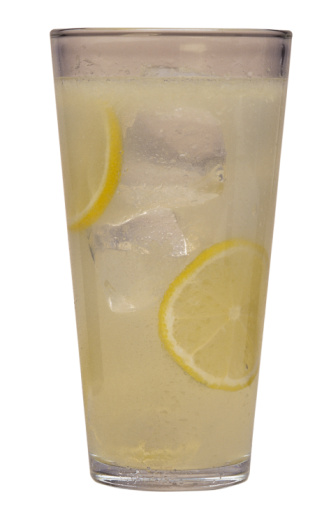
Lemonade (24 oz)
300 calories
0 g fat
74 g sugar
Noticing a trend here? Lemonade, like cotton candy and snow cones, earns all of its calories from sugar. No wonder the summertime beverage earns its own category in this must-see list of The Worst Drinks in America. The problem is that lemon juice is inherently sour, and half a cup contains only three grams of sugar. That means virtually all the sweetness in the cup comes from added sugars, which puts lemonade on par with that other liquid candy we call soda. By switching to unsweetened tea and adding sugar yourself, you can control the number of empty calories in your cup.
Eat This Instead!Iced Tea (24 oz sweetened with 2 sugar packets)
30 calories
0 g fat
8 g sugar

#5: WORST FROZEN TREAT
Snow Cone (3 oz. syrup)
270 calories
0 g fat
68 g sugar
You know what's ever-so-slightly worse than consuming liquid sugar in strand form? Consuming liquid sugar in liquid form, which is precisely what you do when you eat a snow cone. The ice is completely benign, but the syrup it's drenched in is anything but—it harbors more than five tablespoons of pure sugar! Go with a scoop of ice cream instead; you could eat three and a half scoops before matching the sugar in one snow cone, and the cream's protein and fat will help temper the rush of glucose that hits your blood. 
Eat This Instead!
Strawberry Ice Cream (1/2 cup)
125 calories
5.5 g fat (3.5 g saturated)
19 g sugar


#6: WORST SWEET CLASSIC
Cotton Candy (2.1 oz)
220 calories
0 g fat
56 g sugar
Here's a brief intro to cotton candy production: To make the "cotton," the candy maestro melts sugar into liquid, sprays it into thin strands, and then rolls it into a ball. Essentially that makes this treat no different than eating sugar straight from the bag, a serious problem considering it has more sweet stuff than three scoops of Breyers Chocolate Chip ice cream and not one iota of redeeming nutrition al value. That's enough to shift your body into fat-storage mode and land you a belly as soft as the confection you're eating. Eat a popsicle instead to save a whopping 46 grams of sugar!
Eat This Instead!Popsicle (1 popsicle)
45 calories
0 g fat
8 g sugar


15 Biggest Nutrition Myths

MYTH #1: High fructose corn syrup is worse than table sugar
Whether or not added sugar is bad for you has never been in dispute. The less sugar you eat, the better. But whether HFCS is worse than plain ol' table sugar has long been a contentious issue. Here’s what you need to know: Both HFCS and table sugar, or sucrose, are built with roughly a 50-50 blend of two sugars, fructose, and glucose. That means in all likelihood that your body can’t tell one from the other—they’re both just sugar. HFCS’s real sin is that it’s supercheap, and as a result, it’s added to everything from cereal to ketchup to salad dressing. Plus it may be affecting your health in ways not yet fully understood by the scientific community. Is it a good idea to minimize the HFCS in your diet? Absolutely. It’s best to cut out all unnecessary sugars. But HFCS’s role as nutritional enemy #1 has been exaggerated. 

MYTH #2: Sea salt is a healthier version of regular salt
Everyday table salt comes from a mine and contains roughly 2,300 milligrams of sodium per teaspoon. Sea salt comes from evaporated seawater, and it also contains roughly 2,300 milligrams of sodium. That makes them, well, roughly identical. Advocates point to the fact that sea salt also contains other compounds like magnesium and iron, but in truth, these minerals exist in trace amounts. To obtain a meaningful dose, you’d have to take in extremely high and potentially dangerous levels of sodium. What’s more, traditional table salt is regularly fortified with iodine, which plays an important role in regulating the hormones in your body. Sea salt, on the other hand, gives you virtually zero iodine. The bottom line is this: If switching from table salt to sea salt causes you to consume even one extra granule, then you’ve just completely snuffed out whatever elusive health boon you hope to receive. Plus you’ve wasted a few bucks. 

MYTH #3: Energy drinks are less harmful than soda
Energy drinks like Red Bull, Monster, and Full Throttle attempt to boost your energy with a cache of B vitamins, herbal extracts, and amino acids. But what your body’s going to remember most (especially around your waistline) is the sugar in these concoctions; a 16-ounce can delivers as much as 280 calories of pure sugar, which is about 80 calories more than you’d find in a 16-ounce cup of Pepsi. What’s more, a University of Maryland study found energy drinks to be 11 percent more corrosive to your teeth than regular soda. So here’s the secret that energy drink companies don’t want you to know: The only proven, significant energy boost comes from caffeine. If you want an energy boost, save yourself the sugar spike and drink a cup of coffee. 
MYTH #4: Diet soda is harmless
The obesity-research community is becoming increasingly aware that the artificial sweeteners used in diet soda—aspartame and sucralose, for instance—lead to hard-to-control food urges later in the day. One Purdue study discovered that rats took in more calories if they'd been fed artificial sweeteners prior to mealtime, and a University of Texas study found that people who consume just three diet sodas per week were more than 40 percent more likely to be obese. Try weaning yourself off by switching to carbonated water and flavoring with lemon, cucumber, and fresh herbs.
MYTH #5: Low-fat foods are better for you
As it applies to food marketing, the term “low fat” is synonymous with “loaded with salt and cheap carbohydrates.” For instance, look at Smucker’s Reduced Fat Peanut Butter. To replace the fat it skimmed out, Smucker’s added a fast-digesting carbohydrate called maltodextrin. That’s not going to help you lose weight. A 2008 study in the New England Journal of Medicine found that over a 2-year span, people on low-carb diets lost 62 percent more body weight than those trying to cut fat. (Plus, the fat in peanut butter is heart-healthy monounsaturated fat—you’d be better off eating more of it, not less!)
MYTH #6: “Trans-fat free” foods are actually trans-fat free
The FDA’s guidelines allow companies to claim 0 grams of trans fat—even broadcast it on the front of their packages—as long as the food in question contains no more than 0.5 grams of trans fat per serving. But here’s the deal: Due to an inextricable link to heart disease, the World Health Organization advises people to keep trans fat intake as low as possible, maxing out at about 1 gram per 2,000 calories consumed. If your cupboard’s full of foods with almost half a gram per serving, you might be blowing past that number every single day. TheAmerican Journal of Health Promotion recently published an article urging the FDA to rethink its lax regulations, but until that happens, you should avoid all foods with “partially hydrogenated oil” (meaning, trans fats) on their ingredients statements.
MYTH #7: Foods labeled “natural” are healthier
The FDA makes no serious effort to control the use of the word "natural" on nutrition labels. Case in point: 7UP boasts that it’s made with “100% Natural Flavors” when, in fact, the soda is sweetened with a decidedly un-natural dose of high fructose corn syrup. “Corn” is natural, but “high fructose corn syrup” is produced using a centrifuge and a series of chemical reactions. Other "natural" abusers include Natural Cheetos, which are made with maltodextrin and disodium phosphate, and “natural advantage” Post Raisin Bran, which bathes its raisins in both sugar and corn syrup. The worst part is, you're likely paying a premium price for common junk food.
MYTH #8: Egg yolks raise your cholesterol
Egg yolks contain dietary cholesterol; this much is true. But research has proven that dietary cholesterol has almost nothing to do with serum cholesterol, the stuff in your blood. Wake Forest University researchers reviewed more than 30 egg studies and found no link between egg consumption and heart disease, and a study in Saint Louis found that eating eggs for breakfast could decrease your calorie intake for the remainder of the day.
MYTH #9: Eating junk food helps battle stress
You’ve been there: Stressed out and sprawled across your sofa with one arm elbow deep in a bag of cheese puffs. In the moment, it can be comforting, but a study published in the British Journal of Psychiatry found that people who consumed the most highly processed foods were 58 percent more likely to be depressed than those who ate the least. Your move: Find a healthy stress snack. Peanut butter and Triscuits do the trick, or check out the next myth …
MYTH #10: Chocolate is bad for you
Cocoa is a plant-based food replete with flavonoids that increase blood flow and release feel-good endorphins. Plus, it contains a healthy kind of saturated fat called stearic acid, which research has shown can increase your good HDL cholesterol. But here’s the rub: When most people think of chocolate, their minds jump immediately to milk chocolate, which contains far more sugar than actual cocoa. Instead, look for dark chocolate, specifically those versions that tell you exactly how much cocoa they contain. A bar with 60% cocoa is good, but the more cocoa it contains, the greater the health effects.
Myth #11: Granola is good for you
Oats are good for you, and the same goes for oatmeal. But granola takes those good-for-you hunks of flattened oat, blankets them in sugar, and bakes them in oil to give them crunch. The amount of fat and sugar added to each oat is at the discretion of food processors, but you can bet your last cup of milk it’s going to far sweeter and more fatty than a bowl of regular cereal. Take this example: A single cup of Quaker Natural Granola, Nuts & Raisins has 420 calories, 30 grams of sugar, and 10 grams of fat. Switch to a humble cup of Kix and you drop down about 90 calories, 2.5 grams of sugar, and 1 gram of fat. Or better yet, find your favorite healthy cereal here: The 24 Best and Worst Cereals in America.
MYTH #12: Bananas are the best source of potassium
Your body uses potassium to keep your nerves and muscles firing efficiently, and an adequate intake can blunt sodium’s effect on blood pressure. One 2009 study found that a 2:1 ratio of potassium to sodium could halve your risk of heart disease, and since the average American consumes about 3,400 milligrams of sodium each day, your goal should be 6,800 milligrams of daily potassium. You’re extremely unlikely to ever reach that mark—and never with bananas alone. One medium banana has 422 milligrams and 105 calories. Here are the sources that earn you roughly the same amount of potassium in fewer calories:
  • Potato, half a medium spud, 80 calories
  • Apricots, 5 whole fruit, 80 calories
  • Cantaloupe, 1 cup cubes, 55 calories
  • Broccoli, 1 full stalk, 50 calories
  • Sun-dried tomatoes, a quarter cup, 35 calories
MYTH #13Oranges are the best source of vitamin C
Far more than a simple immune booster, vitamin C is an antioxidant that plays a host of important roles in your body. It strengthens skin by helping to build collagen, improves mood by increasing the flow of norepinephrine, and bolsters metabolic efficiency by helping transport fat cells into the body’s energy-burning mitochondria. But since your body can neither store nor create the wonder vitamin, you need to provide a constant supply. An orange is the most famous vitamin-C food, and although it’s a good source, it’s by no means the best. For 70 calories, one orange gives you about 70 micrograms of vitamin C. Here are five sources with just as much vitamin C and even fewer calories:
  • Papaya, ¾ cup, 50 calories
  • Brussel’s sprouts, 1 cup, 40 calories
  • Strawberries, 7 large fruit, 40 calories
  • Broccoli, ½ stalk, 25 calories
  • Red Bell Pepper, ½ medium pepper, 20 calories

MYTH #14: Organic is always better
Often, but not in every case. Organic produce is almost nutritionally identical to its conventional counterpart. The issue is pesticide exposure—pesticides have been linked to an increased risk of obesity in some studies. But many conventionally grown fruits and vegetables are very low in pesticides. Take, for example, the conventional onion: It’s got the lowest pesticide load of 45 fruits and vegetables tested by the Environmental Working Group. Also in the safe-to-eat-conventional group are avocados, sweet corn, and pineapple. In general, fruits and vegetables with impermeable skins are safe to buy conventional, while produce like celery, peaches, apples, and blueberries are better purchased organic.
MYTH #15: Meat is bad for you
Pork, beef, and lamb are among the world’s best sources of complete protein, and a Danish study found that dieting with 25 percent of calories from protein can help you lose twice as much weight as dieting with 12 percent protein. Then there’s vitamin B12, which is prevalent only in animal-based foods. B12 is essential to your body’s ability to decode DNA and build red blood cells, and British researchers found that adequate intakes protect against age-related brain shrinkage. Now, if you’re worried that meat will increase your risk for heart disease, don’t be. A Harvard review last year looked at 20 studies and found that meat’s link to heart disease exists only with processed meats like bacon, sausage, and deli cuts. Unprocessed meats, those that hadn’t been smoked, cured, or chemically preserved, presented absolutely zero risk.


Twitter Delicious Facebook Digg Stumbleupon Favorites More

 
Design by Free WordPress Themes | Bloggerized by Lasantha - Premium Blogger Themes | Elf Coupons